CE Marking for AI Systems: The EU Declaration of Conformity Explained
CE marking is the visible end of the conformity process. This guide covers when AI systems need CE marking, declaration contents, QMS duties and the SaaS question.
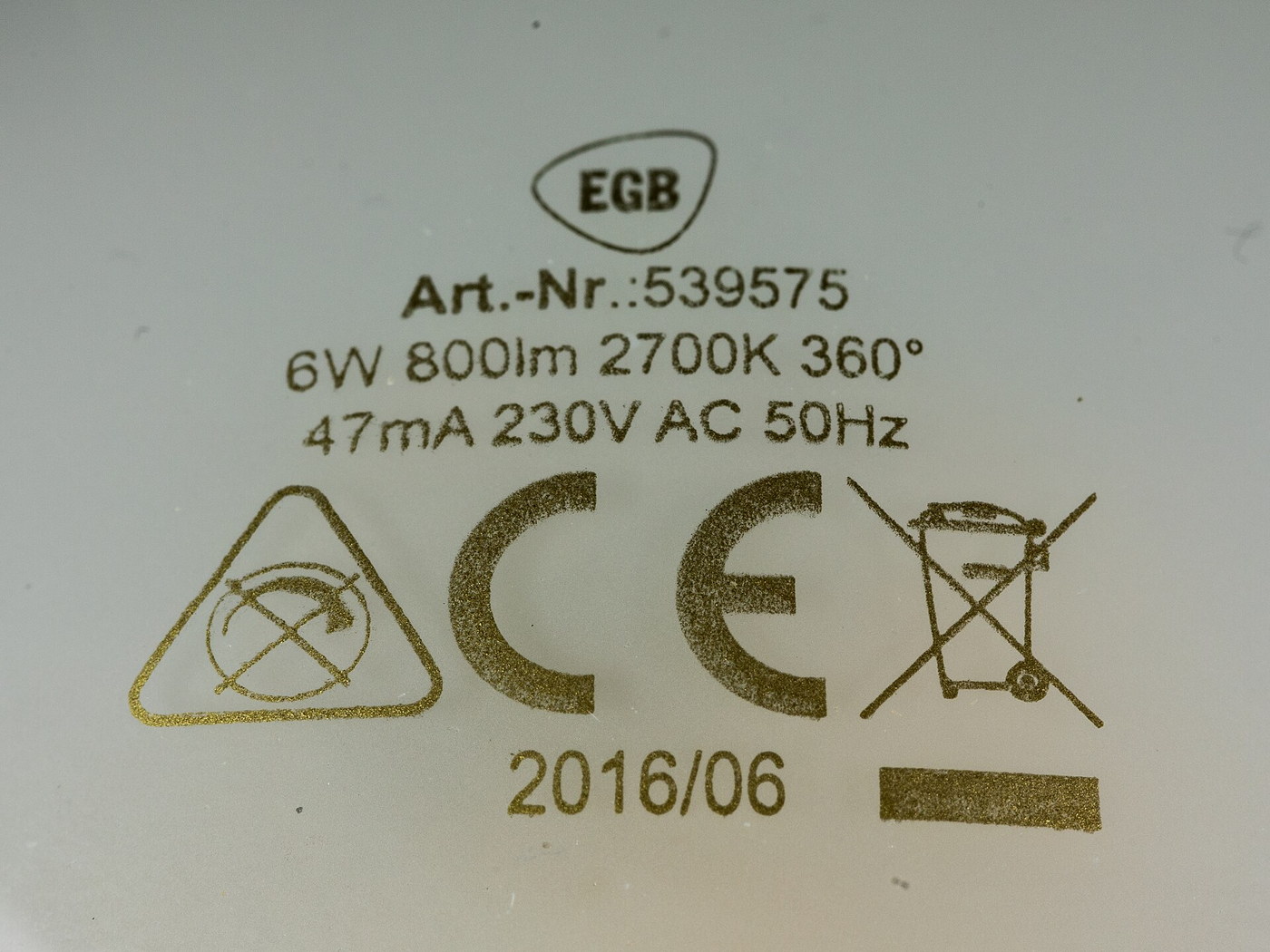

CE marking for AI systems is the last step of a long chain, not the first — and most firms meet it backwards, when a customer asks for the mark and nobody can produce the paperwork behind it. The mark is a statement: a conformity assessment has been completed, a technical file exists, and a named person has signed an EU declaration of conformity. This guide covers when you need the mark, exactly what the eu declaration of conformity ai act must contain, what quality-system duties sit behind it, and the question every SaaS vendor asks: does this apply to us?
When an AI system needs CE marking
Article 48 requires CE marking for high-risk AI systems before they are placed on the market or put into service. “High-risk” is the gateway concept, and it has two doors:
- The product door (Article 6(1)). Your AI functions as a safety component of — or is a pattern-recognition product in — machinery, medical devices, toys, lifts, radio equipment, vehicles and the other product legislation listed in Annex I. In this world, the AI Act’s obligations attach through the product’s existing conformity regime, and the mark you affix usually references the product legislation plus the AI Act.
- The use door (Article 6(2)). Your AI is intended for one of the eight Annex III areas — biometrics, critical infrastructure, education, employment, essential services, law enforcement, migration or justice — and is not covered by Annex I. Here the AI Act runs its own conformity route, and CE marking follows Article 48 directly.
If neither door applies — a content-recommendation tool, an internal analytics model, a general chatbot — no CE marking is required under the AI Act. That is the answer to do saas ai systems need ce marking for the majority of SaaS: no mark, but transparency duties (Article 50), literacy duties (Article 4 and deployer obligations where an Annex III use hides underneath) still apply. The trap is assuming “SaaS” settles it: a SaaS recruitment screening tool sits squarely inside Annex III(4) and owes the full high-risk regime through the provider route.
The two conformity routes
The route decides whether a third party ever touches your file:
| Route | Applies to | Assessment | Practical effect |
|---|---|---|---|
| Internal control (Annex VI / Module A) | Most Annex III high-risk systems | Provider self-assessment with a complete technical file | No notified body; speed depends entirely on your documentation |
| Notified body (Annex VII) | Biometrics, and selected justice, migration and law-enforcement uses | Third-party assessment of the QMS and technical file | External lead time, corrective actions, surveillance |
| Annex I product route | AI inside regulated products | Via the product’s own conformity procedure | CE mark cites the product legislation; AI Act duties fold into it |
Where a harmonised standard is cited in the Official Journal, it gives presumption of conformity (Article 40) — the practical shortcut that replaces argument with evidence. Track the standards work: until citation, your technical file is your best defence.
What the EU declaration of conformity must contain
The declaration of conformity contents ai act are specified in Article 47. The document must state:
- Name and contact of the provider (and, where applicable, the authorised representative).
- Identification of the system — the trade name, model type or batch allowing unambiguous linkage to the technical documentation.
- Statement of conformity — explicit declaration that the system satisfies the Regulation, plus reference to any harmonised standards, common specifications or technical specifications used.
- Conformity assessment procedure — which route was followed, and the identifying details of any notified body involved.
- Place and date of issue, and the name, function and signature of the signatory.
Then the practical points firms miss: the declaration must accompany the system (Article 47(3)) for ten years, be translated into the language required by the member state where the system is placed, and be kept with the technical documentation. A declaration signed by a junior engineer with no documented authority is a finding waiting to happen — define the signatory’s mandate in writing.
Affixing the mark: how to affix ce mark ai product
Article 48(1) sets the geometry: CE marking in the form set out in Regulation (EC) No 765/2008 — the letters CE in the prescribed proportions — affixed visibly, legibly and permanently. In practice:
- Software delivered electronically: mark displayed in the user interface during installation or at first launch, plus in the documentation; the mark must not be smaller than 5 mm.
- Embedded in hardware: the mark on the device, or where that is impossible, on the packaging and the accompanying documents.
- Never mark the system before the conformity assessment is complete — premature marking is itself a breach, distinct from having no mark at all.
Only the provider affixes it (importers affix the importer’s details where required and verify the mark exists). If you white-label a vendor’s system, their mark does not automatically transfer to your brand: rebranding pushes you toward the provider role.
The quality management system behind the mark
Article 17 requires providers of high-risk AI systems to establish, document, implement and maintain a quality management system (QMS) covering the periods before and after placing on the market. The ai act quality management system requirements break into nine components:
- Regulatory strategy — how the system’s strategy and compliance are structured.
- Design control — design and development planning, specifications, verification and validation, with a design-change control procedure.
- Data governance — the Article 10 pipeline for training, validation and testing data.
- Production and post-production — a production quality-control system and procedures for monitoring, reporting and correcting post-market problems.
- Corrective and preventive action — the CAPA loop that auditors look for first.
- Monitoring and measuring — measurement, testing and statistical analysis of output quality.
- Supplier management — a framework for evaluating, selecting and monitoring suppliers, including the data and model providers you rent your capability from.
- Documentation and record-keeping — controlled procedures, retention, and traceability from system version to evidence.
- Competence and communication — resource management, training, and procedures for communication with authorities and customers.
If you already run ISO 9001, map your existing system onto these components rather than starting over — but expect two genuine extensions: the data-governance component tied directly to Article 10, and post-market monitoring (Article 72) tied to performance data in live operation. ISO 27001 covers security, not conformity; it helps at the margins but does not substitute.
The documents that have to exist before the mark
CE marking without the underlying file is misrepresentation. For the internal-control route, your technical documentation (Annex IV) must be able to demonstrate:
- System description and intended purpose, including provider details and the design specifications;
- The risk-management system (Article 9) as a living record, not a launch-day PDF;
- Data-governance methodology showing representative, quality-assured datasets and bias examination (Article 10);
- Design and development records, including validation and testing results against the intended purpose;
- Human-oversight measures (Article 14) and their communication to the deployer;
- Logging capability (Article 12) and the post-market monitoring plan (Article 72);
- The conformity assessment record itself and any harmonised standards used.
Keep it version-linked: authorities may ask for the file of the version that was on the market at a past date, not the current one. Ten-year retention applies to the declaration and technical documentation — align your document lifecycle so versions stay retrievable after staff turnover.
The SaaS question, answered directly
The recurring question is ai act conformity documentation ce for pure software subscriptions. The honest answer has three lines:
- Tools outside Annex I and Annex III: no CE marking, no declaration — but Article 50 transparency, AI literacy and ordinary contract hygiene still apply.
- SaaS that is Annex III (for example recruitment screening, creditworthiness of natural persons, education assessment): the provider owes the full high-risk regime including CE marking; the deployer owes Article 26. Push your vendor for the declaration; ask for the technical-file index rather than the file itself — you are entitled to evidence, not necessarily to their source code.
- You brand the SaaS as yours: you are the provider. The customer-facing mark and declaration become your documents to sign.
Document whichever line applies to each tool in your register. The classification rationale is what an auditor reads first, and “our vendor handles compliance” without a declaration number is not a rationale.
How to check your own position
Inventory every AI system you provide or use, then apply the two-door test: does it touch Annex I product legislation, or Annex III use areas? For every “yes”, locate four artefacts — technical file, risk-management record, QMS document and signed declaration — and note which are missing. Check the mark itself: present, correctly formed, and traceable to a declaration dated before market placement? For systems outside scope, record the one-line rationale. Then repeat the test for your top ten AI vendors and store the declaration number in your supplier record. A 500-person firm typically completes this pass in two days, and it converts the CE question from a scramble into a filing exercise.
Frequently asked questions
Do AI systems need a CE marking under the EU AI Act?
Only high-risk AI systems do. Article 48 requires CE marking before a high-risk system is placed on the market or put into service. Systems outside both high-risk routes — no Annex I product link and no Annex III use — carry no CE marking requirement, though transparency and literacy duties can still apply. The marking step follows, never precedes, a completed conformity assessment.
What must be in an EU declaration of conformity for AI?
Article 47 requires the provider’s name and contact details, unambiguous identification of the system, an explicit statement of conformity with the Regulation and the standards used, details of the conformity assessment procedure and any notified body, the place and date of issue, and the name, function and signature of the authorised signatory. The declaration accompanies the system for ten years.
Can a SaaS product have CE marking?
Yes — if the SaaS falls under Annex III (a recruitment screening service or a creditworthiness tool, for example), the provider owes the full high-risk regime and affixes CE marking like any other provider. Purely non-high-risk SaaS carries no CE obligation. Delivering software over the internet does not exempt a high-risk function from the marking requirement.
How do you affix a CE mark to software?
Where affixing to the product itself is impossible — normal for software — Article 48 allows the marking on the packaging and in the accompanying documentation; in practice, SaaS providers display the mark in the user interface at installation or first launch and in documentation, at no smaller than 5 mm, visibly, legibly and permanently. Only the provider affixes it, and only after the conformity assessment is complete.
Does a quality management system replace technical documentation?
No. Article 17’s QMS is the organisational system that produces conformity as an ongoing outcome; Annex IV technical documentation is the per-system evidence that the system met requirements. Authorities expect both — the QMS shows the process is controlled, the technical file shows this particular system passed it. In audits they are requested separately.
Put this guide to work on your own estate.
Run the free exposure scan to see which of these articles actually apply to your company — 12 questions, four minutes, no card. Confirm your email and the full report unlocks.
- Free forever plan
- No credit card
- EU-hosted · GDPR-native
Build a live AI register in minutes — upgrade only when you need the audit pack.
Keep reading
Does the EU AI Act Apply to US Companies? Territorial Scope Explained
10 min
ExplainersEU AI Act for SMEs and Start-Ups: What Applies, What's Exempt, and the Fine Rule That Helps You
9 min
ExplainersThe Digital Omnibus Delay: Your December 2027 High-Risk AI Deadline Is Already Ticking
12 min