EU AI Act Autonomous Vehicles: How the Automotive Sector Complies with Vehicle AI Rules
Vehicles are products, not apps. How Article 6(1), Annex I and type-approval law decide who carries the burden for ADAS and self-driving software.
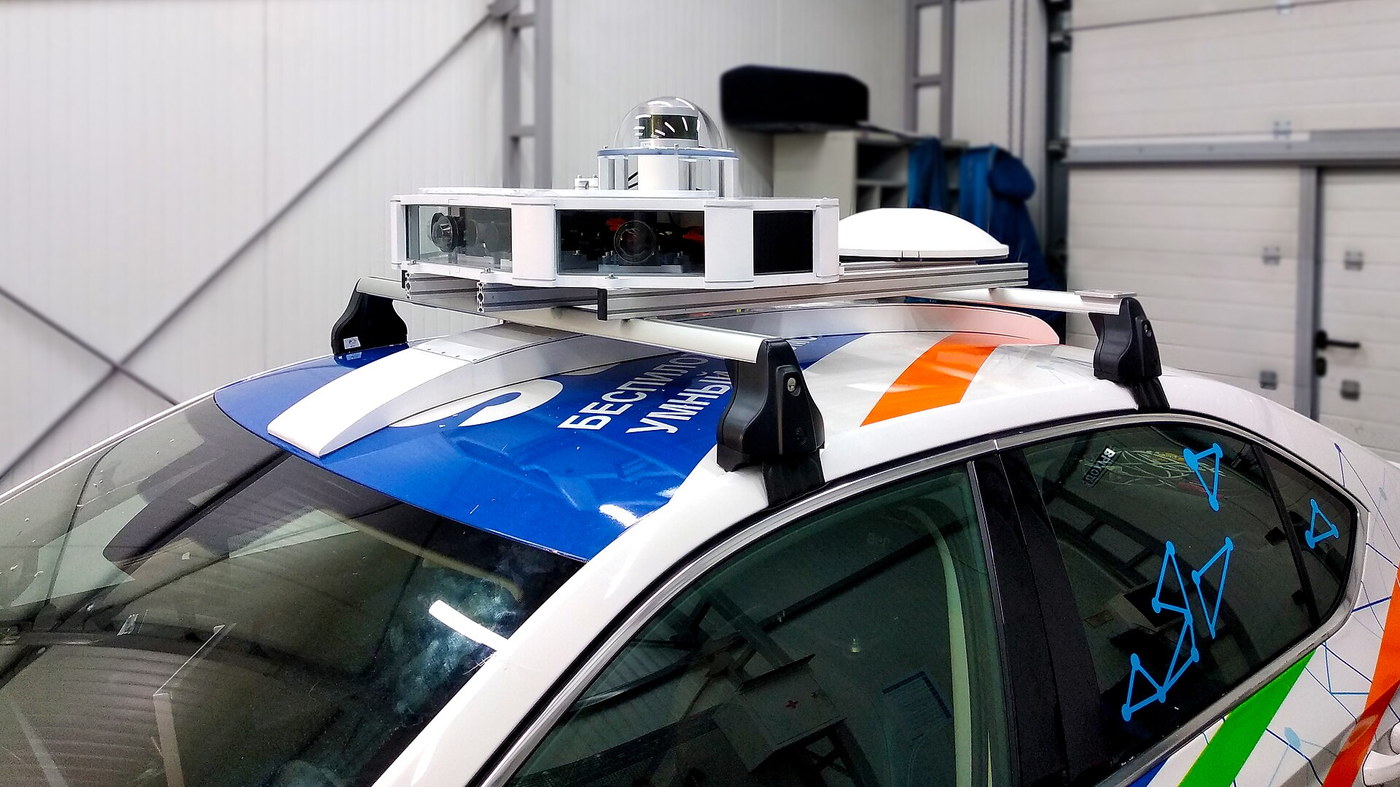

The EU AI Act autonomous vehicles question starts in product law, not privacy law. A car is not an app with wheels: an AI system that acts as a safety component of a type-approved vehicle is caught by Article 6(1) and Annex I of Regulation (EU) 2024/1689, and its duties arrive through the type-approval framework rather than through a software licence. That is why AI act automotive sector compliance ends up looking like engineering evidence and approval files, not a DPIA exercise.
On a dedicated self driving car ai regulation eu-wide: there is none. The AI Act, the type-approval framework and the sector amendments the Act makes to it work together. What follows covers classification, who becomes the provider, what you must document, and how type-approval interacts.
EU AI Act autonomous vehicles start with product law, not app law
The two-condition test. Article 6(1) makes an AI system high-risk only where both conditions hold: the system is intended to be used as a safety component of a product — or is itself a product — covered by the Union harmonisation legislation listed in Annex I; and that product is required to undergo a third-party conformity assessment under that legislation before being placed on the market. Vehicle AI clears both: perception, planning and control functions are safety components, and EU whole-vehicle approval runs through a national type-approval authority plus technical services, so the assessment is genuinely third-party.
The only classification question that matters for onboard software is never “is the car autonomous?” but “is this AI doing a safety job inside a product that must be approved?” Autonomy level is a marketing and engineering axis; it appears nowhere in Article 6(1).
Annex I has two halves. Section A lists New Legislative Framework legislation (machinery, toys, lifts, medical devices and similar); Section B lists other acts — including Regulation (EU) 2018/858 on vehicle approval and Regulation (EU) 2019/2144 on general safety. The ai act annex i machinery regulation vehicles question therefore has two answers depending on which machine you mean.
The consequence. For Section B products, Article 2(2) applies only Article 6(1), Articles 102–109 and Article 112 — so the Chapter III duties do not land on car makers directly. Articles 107 and 109 fold them into type-approval law instead, instructing the Commission to take those requirements into account in delegated acts. The ai regulation for car manufacturers europe therefore runs on two tracks: AI Act classification plus amended type-approval law; check the consolidated text as the amendments land.
Machinery is the opposite case. An automated guided vehicle or robotic cell in your plant is Section A machinery: the full regime applies directly — Annex IV documentation, Article 17 quality management, CE marking, declaration, registration, incident reporting. Groups building both cars and the automation that make them run two regimes side by side.
EU AI Act driver assistance systems and where the automation line falls
Autonomy level is the wrong axis. SAE levels describe who is driving; Article 6(1) asks what the software is in relation to the product. A level 2 lane-keeping assistant powered by a neural perception stack is an AI safety component in exactly the same sense as a level 4 shuttle’s planning module. Nothing in the AI Act downgrades a system because the driver is still expected to intervene.
Two filters decide the rest. First, is it an AI system at all — a rule-based emergency brake with fixed thresholds is not, a camera-based pedestrian classifier is. Second, is it doing a safety job? Infotainment, route-time prediction and battery estimation are not safety components and sit outside Article 6(1) — but not unregulated: an in-cabin assistant is a chatbot under Article 50, and Article 4 literacy covers whoever operates it.
In-cabin monitoring deserves its own note. Article 5(1)(f) prohibits inferring emotions in the workplace, except where the system is placed on the market for medical or safety reasons. Drowsiness and distraction detection for professional drivers falls inside that exception; a system that infers mood to sell services to the driver, or to price an insurance product, does not.
Approval today already exists for the hard part. Automated steering and lane-keeping are type-approved under UN regulations such as R79 and R157 alongside the EU framework, which is where the evidence for driving behaviour already goes. The AI Act does not replace that file — it adds an AI requirements layer to it.
Who counts as the provider: OEMs, Tier-1s and software vendors
Provider means own name. A provider develops an AI system and places it on the market under its own name or trademark; a deployer uses it under its own authority (Article 3). That boundary decides which company holds the documentation, and in automotive it shifts from contract to contract.
Three shapes you will recognise:
- OEM selling a complete vehicle with an AI-driven safety function under its own badge: the OEM is the provider for that function, and its type-approval file is the compliance file.
- Tier-1 shipping an ADAS controller under its own name to several OEMs: the Tier-1 is the provider of the AI inside, and must be able to produce the equivalent of Annex IV documentation per customer, with change notification.
- Supplier building strictly to an OEM specification, sold under the OEM’s brand: the OEM is usually the provider, but the supplier still owes training-data description, validation results and known-limitation data — make that flow-down a contractual clause now, not a discovery mid-approval.
The same applies to a mobility operator running a licensed stack in its own livery and to a retrofit-kit seller: whoever signs the declaration is the provider.
| System or level | Who is the provider | Primary obligation route |
|---|---|---|
| Level 1–2 assistance (AEB, lane keeping, adaptive cruise) with ML perception | OEM selling under its own badge | Article 6(1) product route via Regulations 2018/858 and 2019/2144; requirements arrive through Articles 107 and 109 |
| Level 3 conditional driving (traffic-jam pilot) | OEM, or the driving-function supplier if it places the function under its own name | Same product route, plus UN R157 automated lane-keeping approval |
| Level 4–5 in a fixed area (shuttle, robotaxi, yard tractor) | Whoever places the system on the market under its own name | Vehicle route where it is a safety component; machinery route where the machine is Section A |
| Retrofit automation kit fitted to an existing vehicle | Kit supplier | Product route — the supplier must hold the technical documentation |
| In-plant AGVs and robotic cells | Machinery manufacturer; site operator as deployer | Direct AI Act route: Annex IV documentation, quality management, CE marking, deployment duties |
What changes in the approval file
The requirements arrive through type-approval, so the work lands in documents the sector already produces. Expect as standing dossier content: a description of the AI system’s capabilities and limits tied to the intended purpose; the development and validation methodology, including the datasets’ provenance, representativeness and known gaps; the performance metrics against the scenarios the system is designed for, with the conditions under which they were measured; the cyber-security measures protecting the software from manipulation; and the role of human oversight — for vehicles, how the driver-monitoring and fallback strategy keep a human able to take over where the design assumes one. Articles 107 and 109 will formalise this list sector by sector through delegated acts — track the implementing acts for your vehicle category, because they convert “take into account” into checkable requirements.
Data governance for driving data
Two data questions run in parallel and are often confused. Where Chapter III applies directly — Section A machinery, Annex III uses mobility operators may hit — Article 10 requires training, validation and testing data to be relevant, representative and examined for bias. In automotive practice that means deliberate scenario coverage: rare critical events (the pedestrian at dusk, low-sun glare) represented on purpose, with documentation showing how you know. Fleet data curation is now a compliance asset. The second question is privacy: in-vehicle and camera processing stays under the GDPR alongside product law — approval files do not substitute for a lawful basis, and employee-driven fleets bring workplace-data duties. Keep the two files connected but distinct; regulators from each regime reject the other’s artefacts as substitutes.
Explaining a price or a decision to a customer
Whether or not a system is high-risk, customers and their advocates will ask why an algorithm produced the number. For motor and property pricing, the AI Act’s Article 86 explanation right does not reach you — it attaches to deployers of high-risk systems — but the GDPR’s equivalent does where decisions are solely automated with legal or similarly significant effects, and commercial pressure runs ahead of both. The practical posture: keep the feature logic descriplainable at a level a claims handler or broker can relay (factors that move a price, in plain language, without exposing trade secrets or fraud-detection detail that would game the model), record when a human reviewed an automated output before it became a decision, and train front-line staff on what they may and may not explain. Insurers who can answer “why this price?” in two sentences during a complaint handle regulatory complaints and churn better than those who discover mid-dispute that nobody documented the logic.
How to check your own position
Take every AI-bearing product your organisation sells and place it against the first table above: which Annex I section (if any), who signs as provider, and which regime carries the requirements — direct AI Act, amended type-approval, or Annex III. For each “direct” or “type-approval” row, verify the five dossier artefacts exist at current version: capability description, dataset statement, performance evidence, cyber-security measures, oversight strategy. For each supplier relationship, confirm the flow-down clause — training-data description, validation results, known limitations, change notification — is in the signed contract rather than the negotiation. Then calendar two watches: the implementing acts under Articles 107 and 109 for your vehicle category, and your next approval cycle. Groups running both vehicle and in-plant machinery programmes should keep one cross-reference sheet showing which regime covers which system — two regimes side by side is where responsibility gaps hide.
Frequently asked questions
Are self-driving cars high-risk under the EU AI Act?
AI intended as a safety component of a type-approved vehicle falls under Article 6(1) and Annex I — but for motor vehicles the requirements are carried into the type-approval framework by Articles 107 and 109 rather than applied as free-standing duties. Either way the obligations follow the vehicle’s approval: documentation, performance evidence and oversight arrangements live in that file, not a separate software certification.
Do level 2 driver assistance systems count as high-risk AI?
If the assistance function is AI-based and acts as a safety component of the vehicle, it meets the Article 6(1) test on the same footing as higher-automation systems — SAE level does not appear in the classification. Non-AI functions with fixed thresholds fall outside the definition, and non-safety features like route prediction sit outside Article 6(1) though transparency duties such as the Article 50 chatbot notice can still apply to in-cabin assistants.
Who is the provider of the AI in a car — the manufacturer or the software supplier?
Whoever places the system on the market under its own name or trademark. A Tier-1 selling an ADAS controller under its own brand is the provider of the AI inside; a supplier building strictly to an OEM specification integrated and sold under the OEM badge normally leaves the OEM as provider, with the supplier owing data, validation and limitation information under contract. The declaration signatory tells you who the law thinks the provider is.
What is the AI Act machinery regulation vehicles split?
Annex I Section A (machinery, toys, medical devices and similar) pulls systems into the direct AI Act regime: Annex IV documentation, CE marking, declaration of conformity. Section B includes motor-vehicle legislation, where only limited provisions apply and the substance is carried into type-approval law via Articles 107 and 109. A group can sit on both paths at once — cars on one, factory automation on the other.
Put this guide to work on your own estate.
Run the free exposure scan to see which of these articles actually apply to your company — 12 questions, four minutes, no card. Confirm your email and the full report unlocks.
- Free forever plan
- No credit card
- EU-hosted · GDPR-native
Build a live AI register in minutes — upgrade only when you need the audit pack.
Keep reading
AI in healthcare under the EU AI Act: clinical decision support and high-risk duties
11 min
Risk & ClassificationThe Annex III High-Risk AI Systems List: All Eight Use Cases Explained with Examples
11 min
Risk & ClassificationThe Eight Prohibited AI Practices Under Article 5: A Compliance Checklist
10 min