Facial Recognition at the Office: Biometrics Under the EU AI Act
A face gate at reception looks like a security upgrade — under the EU AI Act it can be a high-risk biometric system, and under GDPR special-category data. The ban list, the Annex III duties and the camera-analytics line explained.
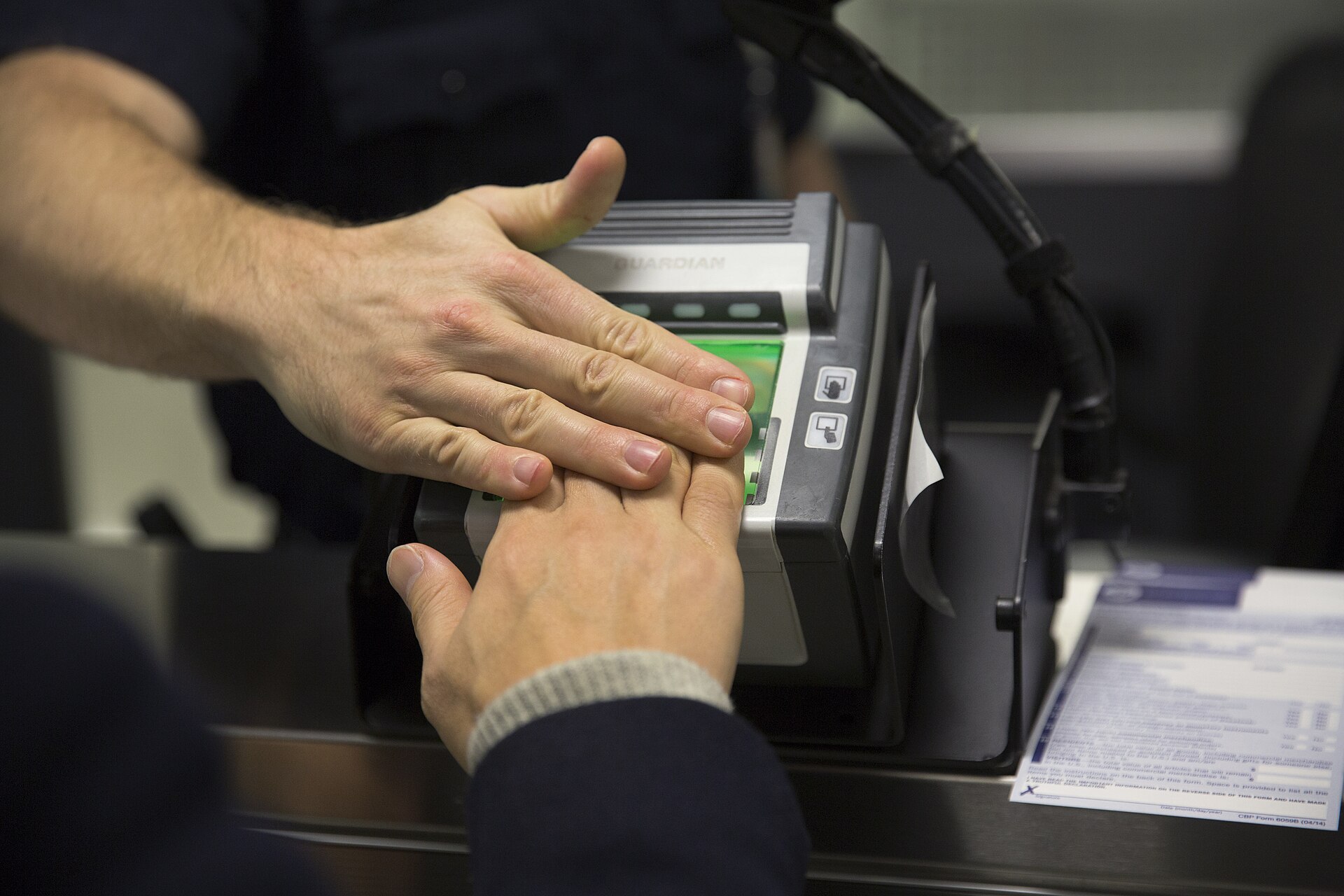

Security teams keep asking a version of the same question: we put a camera at the turnstile and the AI matches faces — is that actually regulated? Yes, and from three directions at once. The EU AI Act regulates biometric systems explicitly — banning some uses outright, classifying others as high-risk — while GDPR treats the underlying face template as special-category data, and national employment law plus works-council rights sit on top of both. The interesting question is not whether it is regulated, but which rule fires for your specific deployment.
The three biometric categories in the Act
The AI Act handles biometrics in two places — the Article 5 prohibition list and Annex III point 1 — and the split matters:
- Remote biometric identification (Annex III point 1(a)): identifying natural persons at a distance by comparing captured biometric data against a reference database. A camera that walks your face through a list is exactly this.
- Biometric categorisation (Annex III point 1(b), with a hard ban in Article 5(1)(g) for sensitive attributes): systems that sort people by biometric data — inferring race, political opinions, religious beliefs, sexual orientation, or criminal behaviour. Sorting customers or staff into such categories is prohibited outright.
- Emotion recognition (banned in Article 5(1)(f) in workplaces and education; otherwise Annex III point 1(c) high-risk): inferring emotional states from faces or voices. The workplace ban is absolute — no risk assessment legalises a mood-reading camera over the packing floor.
The prohibited-practices screen comes first. If your deployment smells like emotion reading at work or sensitive-attribute sorting, stop: no conformity assessment, no register entry, no deployment.
Is your office turnstile “remote” biometric identification?
The regulator’s definition turns on distance, not on intent: a system that identifies a person without requiring physical contact with a sensor is remote biometric identification. A fingerprint pad you press is not; a camera you walk past is. The practical consequences for face-unlock gates:
- High-risk territory. Using facial identification to admit employees puts you in Annex III point 1(a) — as deployer you owe human oversight competence, input-data checks, worker information, log retention, and an entry wherever registration obligations apply.
- Verification vs identification is your working distinction. A device that only answers “is this the same person who enrolled yesterday?” (1:1) presents a narrower risk than a gate that searches the whole company list on every pass (1:N). Vendors market both as “face unlock” — write which one you bought into the file, because the answer changes your assessment.
- Enrolment is where GDPR bites first. The face template is biometric data used for unique identification — special category under GDPR Article 9 — so you need an Article 9 basis, a lawful purpose, retention limits, and typically a works-council agreement before a single employee is enrolled.
Retail, visitors and everything in between
The same technology stack produces different legal answers depending on who is scanned and why:
| Deployment | AI Act status | GDPR angle | First action |
|---|---|---|---|
| Staff face gate (1:N) | Annex III 1(a) — high-risk | Art. 9 special category; employee consent is weak | Document role + works-council process |
| Retail customer face tagging | Annex III 1(a)/1(b) high-risk; sensitive-attribute sorting banned | Lawful basis + transparency duties | Kill any demographic inference now |
| Emotion analysis of shoppers | Annex III 1(c) high-risk | Likely no lawful basis in practice | Do not deploy |
| Emotion analysis of staff | Prohibited (Art. 5(1)(f)) | N/A | Remove from roadmap entirely |
| People counting / heat maps (no identification) | Not biometric identification — generally minimal risk | Still personal data if individuals are distinguishable | Prefer aggregate processing; keep the privacy notice honest |
| Visitor sign-in with ID check by a human | Outside the AI Act’s biometric scope | Ordinary personal data | Nothing special |
The line to hold: analytics that cannot name you are a different animal from analytics that can. Cameras that count anonymous flows do not become biometric systems merely because they run a neural network; cameras that re-identify, rank, or label people do.
The Article 5 exception that almost nobody qualifies for
The one narrow carve-in on remote biometric identification concerns real-time use in publicly accessible spaces for law-enforcement purposes — hunt for a victim, prevent a specific terrorist threat, locate a suspect of a serious crime — each with conditions and time limits, and post-remote identification under separate conditions. The carve-out exists for police, not for facilities management: if your organisation is not a law-enforcement authority operating under national law with the required authorisation, the exceptions are not available to you, no matter how tight your security budget is.
Vendor due diligence in four questions
Ask the vendor, in writing, before the pilot:
- Is the comparison 1:1 verification or 1:N identification, and where does the template live? (On-device vs server changes the GDPR exposure enormously.)
- What Annex III analysis have they done as provider, and where is the EU database registration? A high-risk provider without a registration number has not finished the job.
- Do they support deletion and export? Face templates need revocation when someone leaves, and data-subject access must reach the biometric store.
- Do they offer a non-biometric mode? Badge-plus-PIN variants of the same hardware exist; sometimes that is the sane answer for a mid-market office.
How to check your own position in three minutes
The free exposure scan asks twelve questions about your AI usage and governance and returns an exposure score, your ranked exposures with the exact article that fired, and your first three moves — mapped to the dates that apply. Confirm your email and the full report unlocks.
Frequently asked questions
Is facial recognition at work banned outright under the EU AI Act?
No — but the category containing it is tightly fenced. Emotion recognition in workplaces is banned outright, and sorting people by sensitive biometric attributes is banned everywhere. Plain facial identification for access control is not banned; it sits in the Annex III high-risk class, which means deployer duties and registration consequences rather than prohibition.
Does GDPR really classify a face scan as special-category data?
Yes, when the biometric data is used for the purpose of uniquely identifying a natural person — which is precisely what an access-control face template does. Article 9 therefore requires a specific condition beyond your normal lawful basis, and in the employment context the imbalance of power makes “consent” a fragile foundation that most supervisory authorities will not accept.
Can we keep the CCTV and just add face recognition later?
Adding identification capability to existing cameras is the regulated step, not the camera itself. Anonymous people-counting on current infrastructure is a different risk tier from switching on recognition — which is why many organisations deliberately configure analytics to stop at counting, and document that decision as a control.
What about cameras in customer-facing shops?
Identification and categorisation of shoppers pushes toward Annex III high-risk; inferring sensitive attributes is prohibited; emotion analysis of customers has no realistic lawful path. What survives is the mundane layer: queue analytics, heat maps, loss prevention handled within strict limits — and honest privacy notices either way.
Do we need to consult the works council before deploying a face gate?
In Germany and several other EU jurisdictions, very likely yes — systems objectively suitable for monitoring performance or behaviour trigger co-determination rights regardless of how you configure them. Even where national law does not compel it, Article 26(7) requires informing workers’ representatives and offering consultation before putting a high-risk system into service at the workplace.
Is there a safe low-tech alternative?
Often yes: badge plus PIN or badge plus fingerprint (contact-based, so outside the “remote” definition) delivers most of the operational benefit without entering Annex III point 1(a). Where the board insists on faces, budget for the full deployer duty set — oversight, logging, worker consultation, deletion workflows — rather than for the hardware alone.
Put this guide to work on your own estate.
Run the free exposure scan to see which of these articles actually apply to your company — 12 questions, four minutes, no card. Confirm your email and the full report unlocks.
- Free forever plan
- No credit card
- EU-hosted · GDPR-native
Build a live AI register in minutes — upgrade only when you need the audit pack.
Keep reading
AI in healthcare under the EU AI Act: clinical decision support and high-risk duties
11 min
Risk & ClassificationThe Annex III High-Risk AI Systems List: All Eight Use Cases Explained with Examples
11 min
Risk & ClassificationThe Eight Prohibited AI Practices Under Article 5: A Compliance Checklist
10 min