What a Market Surveillance Authority Can Ask You for Under the AI Act
Enforcement is a document request, not a raid. Here is what a market surveillance authority asks for, what it can compel, and the file that lets you answer inside the deadline.
The AI Act is enforced by national market surveillance authorities, one per member state, backed by the AI Office for the general-purpose model layer. In practice, an inspection looks less like a dawn raid and more like a letter with a deadline: provide the following information on the following systems within X days.
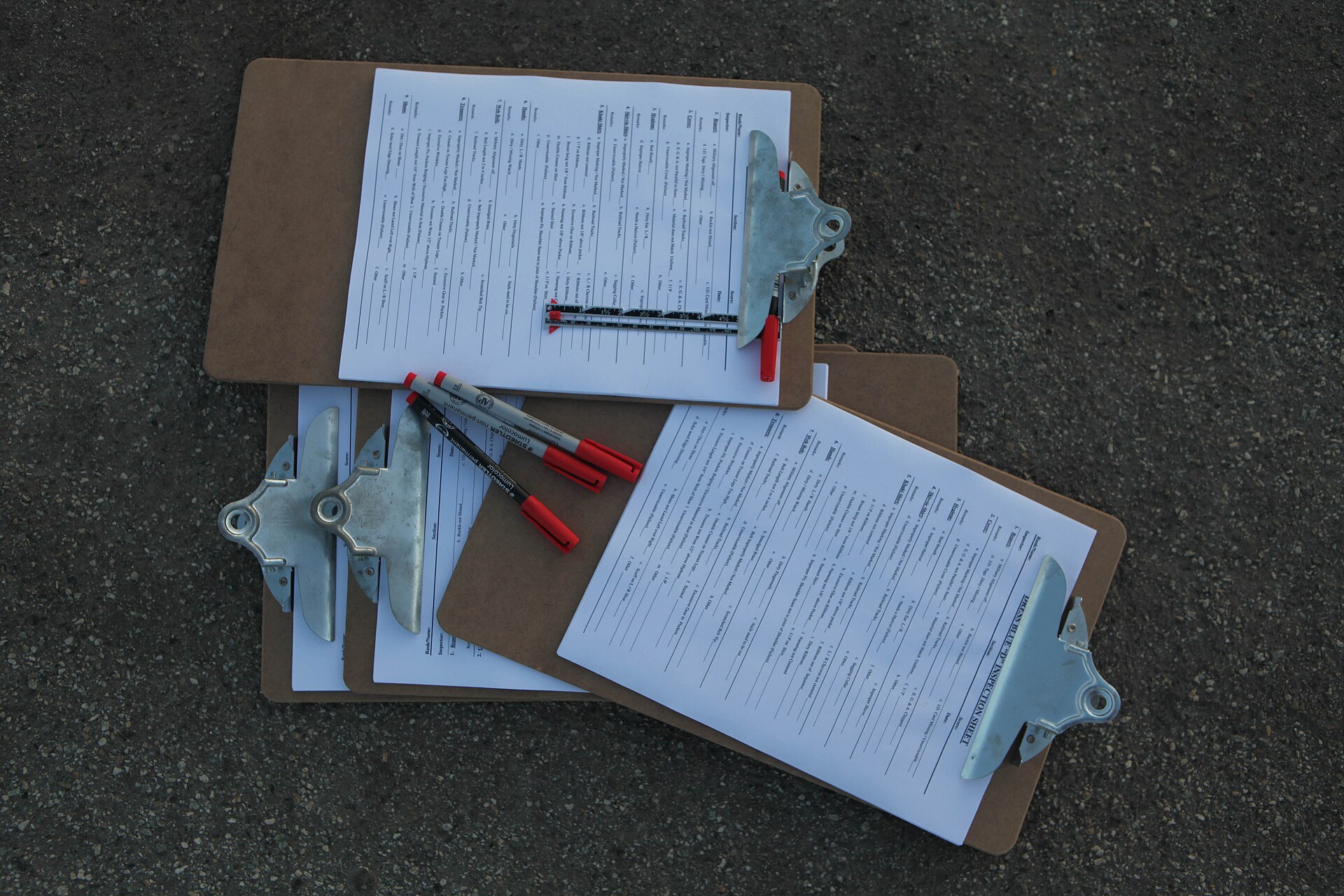

Article 21 makes cooperation a legal duty. Providers and deployers must supply information and access to documentation on request, allow inspections where justified and proportionate, and cooperate fully. Failing to cooperate, or supplying incorrect, incomplete or misleading information, is separately sanctionable at up to €7.5M or 1% of worldwide turnover under Article 99(5).
That last point is the one worth internalising: the cover-up is penalised as its own offence, distinct from whatever the underlying finding turns out to be.
What triggers attention
Authorities work from signals, not random selection. The realistic triggers are:
- A serious incident report you filed under Article 73 — the report itself opens the file.
- A complaint from an affected individual, an employee or a customer.
- An Article 86 request for explanation that went unanswered or was answered badly.
- Sector sweeps — recruitment, credit, insurance and public-sector procurement are routinely sampled first because Annex III points 4 and 5 concentrate there.
- Cross-references from GDPR authorities, since DPIA and AI Act findings overlap heavily.
- Public-facing evidence — a prohibited-practice claim, a deepfake with no label, an AI claim in marketing.
The most predictable outcome is the boring one: a routine request following your own registration or a buyer escalation.
The standard request list
Requests vary by sector, but the core set is remarkably consistent. Each item below is paired with the artefact that satisfies it.
| What they ask for | The artefact that answers it |
|---|---|
| List of AI systems in use, with purpose | The AI register export |
| Role for each system (provider / deployer / importer) | Role analysis with reasoning |
| Classification and its rationale | Register rows plus the article relied on |
| Technical documentation (Annex IV) | Provider pack, or your own if you are the provider |
| Instructions of use given to deployers | Vendor documentation reference |
| Conformity assessment route and declaration | CE declaration, notified-body reference |
| Human oversight arrangements | Named overseer, training record, override log |
| Input-data quality controls | Data validation evidence |
| Logging arrangements and retention | Log config + retention policy (6-month floor for high-risk) |
| AI literacy measures | Policy, attendance, assessment scores |
| Fundamental-rights impact assessment | Article 27 FRIA, or documented reasoning for no trigger |
| Post-market monitoring plan | Article 72 plan and its outputs |
| Serious incident history | Incident log with dates and notifications |
| Disclosure register for transparency duties | Article 50 wording, placement, owner |
| Sub-processors and data locations | Vendor list + DPA |
Read that list as a gap analysis rather than a to-do list. Any row where the answer is “we would have to find that” is a finding.
How much time you have, and what “cooperation” means
The request will state a deadline — typically two to four weeks for a first request, shorter where an incident is involved. Article 21 requires:
- Provide the information requested, complete and accurate.
- Give access to documentation and, where justified, to the system itself for testing.
- Allow inspection at your premises where the authority considers it necessary.
- Respond through a named contact — an authority will not chase a shared inbox.
Nothing in Article 21 requires you to answer on the spot, volunteer material outside the scope of the request, or waive privilege over legal advice. It requires accuracy, completeness within scope, and speed.
The rule that prevents most damage: never speculate in a first response. A scoped, accurate response with a named contact and a stated date for anything outstanding is compliant. An over-broad answer containing one factual error converts a documentation question into an Article 99(5) problem.
The inspection file to keep ready
Maintain a standing folder — updated on the same quarterly rhythm as your register — with these eight tabs:
- Systems and roles — one page per system: role, tier, rationale, article, owner, review date.
- Provider evidence — technical documentation, Annex IV contents, declaration of conformity, EU database registration.
- Deployer controls — oversight assignments, training records, input-data checks, log configuration.
- Assessments — FRIA or the documented no-trigger reasoning, DPIAs, Article 86 explanation process.
- Monitoring and incidents — Article 72 plan, incident log, notifications with dates.
- Transparency — Article 50 disclosure register with placement screenshots.
- Literacy — policy, matrix, attendance, assessments, refresh dates.
- Change history — rule-pack versions, re-classifications, vendor notifications received.
If that folder exists, a first request is an afternoon of assembly. If it does not, the same request becomes a six-week archaeology project run under a deadline.
The three responses that make things worse
- “We need to understand the scope first, so we need six weeks.” Scope questions are legitimate, but they are answered by asking, not by delaying. Ask, then answer within the deadline.
- Producing a document you have not verified. Sending a register you know is three months stale, when asked for current records, is the misleading-information offence in one step.
- Nobody owns the response. Split answers across IT, legal and HR produce contradictions. One named owner, one assembled response, one sign-off.
Where enforcement actually concentrates
Sectors under Annex III points 4 and 5 — employment, credit, insurance, essential services — and deployers in public-sector-adjacent settings carry the heaviest expectations. But Article 50 transparency bites across every sector equally, because the evidence is published. A website that talks to customers without disclosure is the cheapest enforcement target there is.
Two clocks run in parallel from 2 August 2026: the penalty regime, and the buyer-driven audits that already ask the same questions. Preparing for one prepares you for both.
Check where you stand before the letter does
The free exposure scan runs twelve questions over your AI usage and governance and returns your score, the ranked exposures with the article that fired, and your first three moves. Confirm your email and the full report unlocks.
Frequently asked questions
Can an EU authority inspect our AI systems?
Yes. Under Article 21, providers and deployers must cooperate with market surveillance authorities: supply requested information and documentation, grant access where necessary, and allow inspections that are justified and proportionate. Refusal, or providing incorrect and incomplete information, is separately penalised under Article 99(5).
Who enforces the AI Act in my country?
National market surveillance authorities designated by each member state, supported at Union level by the AI Office, which handles general-purpose AI model providers and coordinates cross-border cases. Your authority is the one with jurisdiction over your establishment.
Do we have to give an authority our AI register?
If you have one, yes — a request for the list of AI systems, their purpose and their classification is a standard first request. This is the single strongest practical argument for maintaining a register before an inspection rather than assembling one after the letter arrives.
What happens if we do not answer within the deadline?
Extensions are possible if you ask early and specifically. Missing a deadline without asking risks a formal decision, fines for non-cooperation, and — where the information is inaccurate or withheld — the separate Article 99(5) penalty of up to €7.5M or 1% of worldwide turnover.
Is a fundamental rights impact assessment something an authority asks for?
Where Article 27 applies — public bodies, private entities providing public services, and deployers of Annex III creditworthiness and essential-services systems — yes, it is on the standard list. Where it does not apply, the expected answer is your documented reasoning for why no trigger exists, not silence.
Put this guide to work on your own estate.
Run the free exposure scan to see which of these articles actually apply to your company — 12 questions, four minutes, no card. Confirm your email and the full report unlocks.
- Free forever plan
- No credit card
- EU-hosted · GDPR-native
Build a live AI register in minutes — upgrade only when you need the audit pack.